Estimating paint correctly helps prevent unnecessary trips to the store and reduces the amount of leftover material after a project. Coverage varies by product, surface condition, application method, and the number of coats required.
So, how many square feet does a gallon of paint cover? A typical gallon of wall paint often covers roughly 350 to 400 square feet with one coat, although individual products can fall above or below that range. Always check the specific paint label or technical information before calculating how much paint you need.
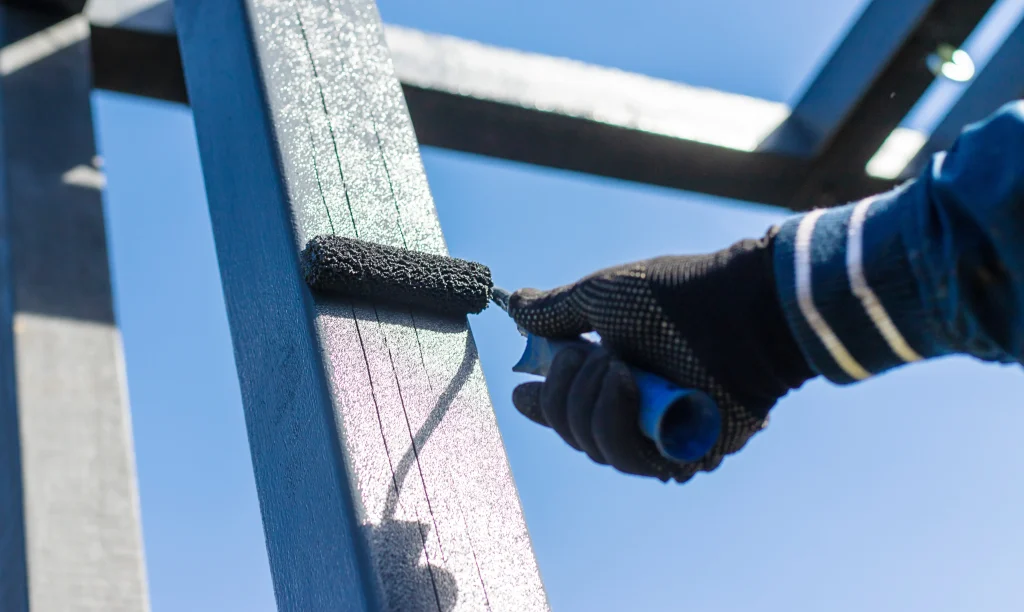
How Many Square Feet Does A Gallon Of Paint Cover
For most standard interior and exterior wall paints, homeowners can use about 350 to 400 square feet per gallon as a starting estimate. Some products offer greater coverage. For example, Benjamin Moore lists approximately 400 to 450 square feet of coverage per gallon for its Regal Select Interior Paint.
However, the answer to how many square feet does a gallon of paint cover should never rely on one universal number. The coverage printed by the manufacturer assumes particular application and surface conditions. Rough siding, porous drywall, masonry, previously unpainted surfaces, and major color changes can all require more paint. Smooth, properly prepared walls may come closer to the manufacturer’s stated coverage. Use the listed spread rate for the exact product whenever possible rather than assuming every gallon performs identically.
Measure The Walls Before Buying Paint
Start by measuring the length and height of each wall. Multiply the width by the height to calculate the square footage. Repeat this process for every wall that will receive paint, then add the results together. This gives you the approximate paintable wall area before adjustments.
For example, a wall measuring 12 feet wide and 8 feet high contains 96 square feet. Four identical walls would contain 384 square feet before accounting for doors and windows. When determining how many square feet does a gallon of paint cover for an entire room, calculate all surfaces first rather than estimating based on floor area. A 200-square-foot room does not have only 200 square feet of wall space. Ceiling height, room shape, closets, hallways, and architectural features can significantly change the actual amount of surface that needs paint.
Subtract Large Doors And Windows Carefully
Doors and windows reduce the amount of wall surface that needs painting. If a room contains several large openings, subtracting their approximate area can improve the estimate. Measure the height and width of each opening, multiply those numbers, and subtract the total from the wall area.
However, there is no need to calculate every small opening with extreme precision. Keeping a little extra paint is useful for touch-ups, minor waste, and areas that absorb more material than expected. When working out how many square feet does a gallon of paint cover, slightly overestimating is usually safer than purchasing exactly enough based on perfect mathematical coverage. Homeowners using professional interior painting services also benefit from having the amount calculated around the actual room layout, wall condition, color change, and coating system instead of floor size alone.
Surface Texture Changes Paint Coverage
Smooth, previously painted drywall generally requires less paint than a rough or highly textured surface. Textured walls have more actual surface area because paint needs to reach into grooves, peaks, and irregularities. Rollers with thicker naps can also hold and distribute more material across those surfaces.
Exterior materials can create even greater differences. Rough wood, stucco, masonry, brick, and heavily textured siding may consume considerably more paint than smooth surfaces. This is why how many square feet does a gallon of paint cover can produce different answers even for walls with identical dimensions. A coating that covers close to its stated rate on smooth drywall may cover substantially less on porous masonry. Professional exterior painting services should account for surface material and condition when estimating paint quantities instead of relying solely on the home’s square footage.
Unpainted Surfaces May Absorb More Paint
New drywall, bare wood, masonry, and other porous surfaces can absorb coatings quickly. Without proper primer, the first coat may soak unevenly into the material, reducing coverage and producing inconsistent sheen or color. Priming can help create a more uniform base before finish paint is applied.
Previously painted surfaces in good condition are often less absorbent. As a result, they may allow the finish paint to spread closer to its expected coverage rate. When calculating how many square feet does a gallon of paint cover, determine whether the surface is bare, repaired, stained, or already sealed. Primer should still be selected according to the material and paint manufacturer’s recommendations. Do not assume that simply applying more finish paint is an effective substitute for proper priming. Correct preparation can improve appearance while making the amount of finish paint needed easier to predict.
Two Coats Nearly Double The Paint Requirement
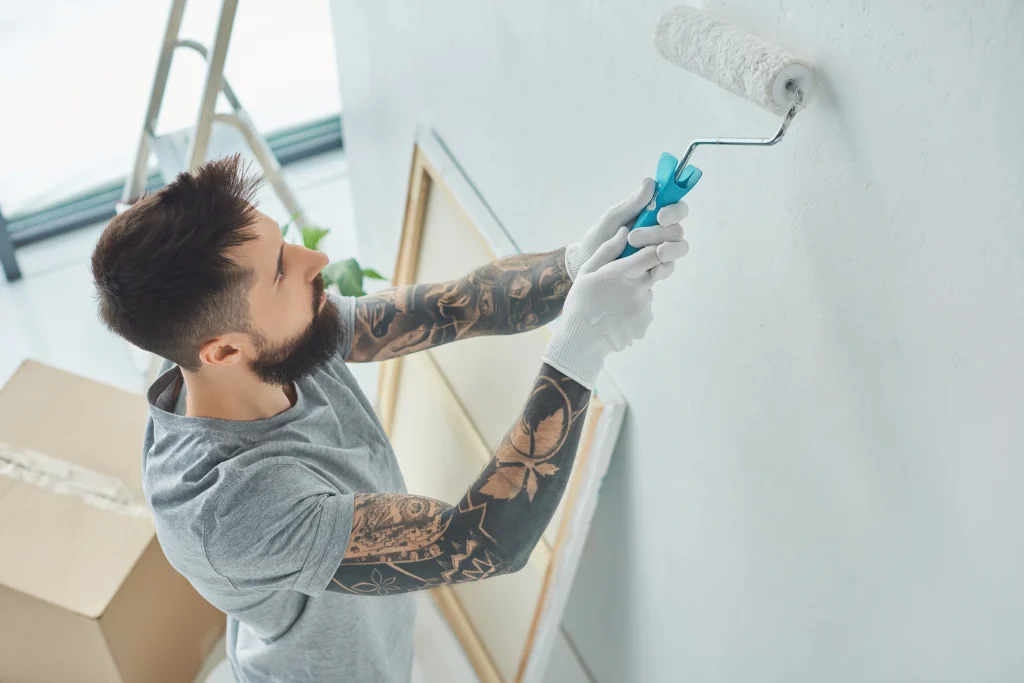
Coverage figures generally describe the area one gallon can cover with one coat. If a project requires two full coats, you need to calculate the paint requirement for the total surface twice. A 400-square-foot area requiring two coats represents approximately 800 square feet of coating application.
This does not always mean the second coat consumes exactly as much paint as the first. Surface absorption and application conditions can change slightly after the initial coat. Still, budgeting for both coats is the safer approach. When homeowners ask how many square feet does a gallon of paint cover, forgetting the second coat is one of the easiest ways to underestimate material needs. Major color changes, uneven existing paint, or products that specify multiple coats can increase the requirement further. Always check the manufacturer’s recommended number of coats rather than assuming one coat will deliver the desired finish.
Application Method Can Affect Paint Usage
Brushes, rollers, and paint sprayers can all produce good results, but each method uses material differently. Rollers provide controlled coverage across broad walls, while brushes work well around trim, corners, and detailed areas. Sprayers can cover large surfaces quickly but may create overspray and additional material loss if masking and technique are poor.
Application skill matters too. Heavy coats, excessive roller loading, repeated passes, and overspray can increase paint consumption. Spreading paint too thinly creates the opposite problem because coverage and durability may suffer. Therefore, how many square feet does a gallon of paint cover also depends on applying the product within its recommended spread rate. The goal should not be to stretch one gallon across the largest possible area. Paint needs sufficient film thickness to provide the coverage, appearance, and performance intended by its manufacturer.
Buy Enough Paint For The Complete Project
After calculating the paintable area, divide that number by the expected coverage per gallon and multiply for the required number of coats. For example, 1,200 square feet of wall area at an estimated 400 square feet per gallon requires about three gallons for one coat or roughly six gallons for two full coats.
So, how many square feet does a gallon of paint cover? Around 350 to 400 square feet is a practical general estimate for many wall paints, but the exact figure depends on the product and surface. Checking the manufacturer’s specifications remains the best approach. It is also wise to keep some matching paint for future touch-ups, especially with custom colors. Homeowners who want help estimating materials and completing the project can contact Four Seasons Painting Co. The company serves Lake County, Ohio, with professional interior and exterior painting based on careful preparation, appropriate products, and consistent application.