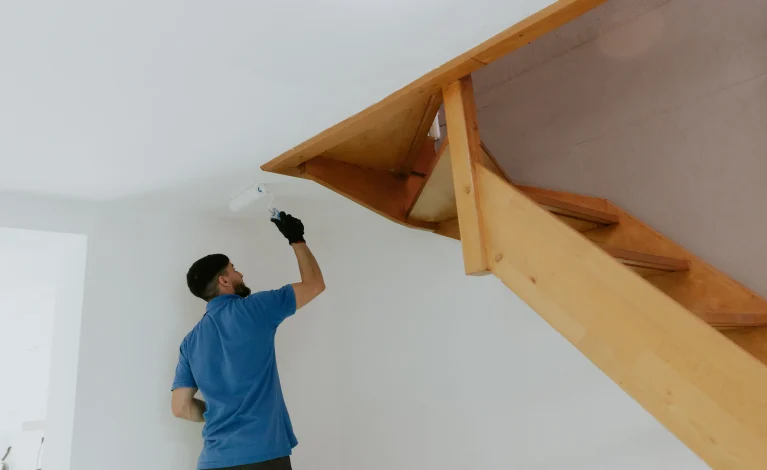
Exterior paint and interior paint may look similar in the can, but manufacturers formulate them for very different environments. Exterior coatings must handle sunlight, rain, temperature changes, moisture, and outdoor biological growth. Interior paints focus more on indoor durability, appearance, washability, and use around occupied living spaces.
So, can I use exterior paint for interior surfaces? In most situations, it is better to use paint specifically labeled for interior use. Exterior products can contain different resins, additives, and preservatives that are designed for outdoor exposure. Using the right coating for the location helps provide better performance while avoiding unnecessary indoor exposure to ingredients intended for exterior conditions.

Can I Use Exterior Paint For Interior Walls
Technically, exterior paint can physically stick to many interior surfaces, but that does not make it the right product for the job. Paint manufacturers develop exterior coatings to remain flexible while facing temperature swings, moisture, sunlight, and changing weather. Those properties are useful outdoors but provide little benefit on a bedroom or living room wall.
When homeowners ask can I use exterior paint for interior walls, the better answer is usually no. Interior paint is formulated for the conditions found inside a home and is designed with indoor appearance, cleaning, and normal household use in mind. Using an exterior product indoors can also create stronger odors or introduce additives that are unnecessary in a controlled interior space. Following the label is the simplest rule. If a product says exterior only, keep it outdoors. If the label specifically states interior/exterior use, it has been formulated for both environments.
Exterior And Interior Paint Have Different Formulas
Paint generally contains pigments, binders, liquids, and additives, but manufacturers adjust those ingredients depending on where the coating will be used. Exterior paints need binders that can expand and contract as outdoor surfaces heat and cool. They may also include additives that help the coating resist mildew and weather exposure.
Interior coatings have different priorities. They are commonly designed to provide smooth appearance, predictable sheen, stain resistance, and easier cleaning in occupied spaces. These differences explain why the answer to can I use exterior paint for interior projects is not simply based on whether both products are latex or acrylic. Two paints may share a broad chemistry while still being formulated for completely different conditions. Professional interior painting services use coatings selected for interior surfaces rather than assuming an exterior product will perform the same way inside the home.

Indoor Air Quality Is Another Consideration
Paint can release volatile organic compounds and other chemicals during application and drying. The amount varies considerably between products. Exterior coatings may contain additives intended to provide outdoor durability rather than to minimize emissions within an occupied room. This makes ventilation and product selection important when painting indoors.
The U.S. Environmental Protection Agency regulates VOC content in architectural coatings under national emission standards. The EPA explains that architectural coatings contribute VOC emissions, which is one reason manufacturers must meet applicable limits. When deciding can I use exterior paint for interior spaces, homeowners should still follow the individual paint label rather than assuming that regulatory compliance makes every coating suitable for indoor use. Choose a product that is specifically intended for interior application and ventilate the area according to manufacturer directions during painting and drying.
Exterior Paint May Include Mildew-Resistant Additives
Outdoor surfaces regularly encounter rain, condensation, humidity, and organic growth. Exterior paints may therefore contain additives intended to help resist mildew and other problems caused by outdoor exposure. These ingredients serve a useful purpose on siding, trim, and other exterior surfaces exposed to weather.
Inside the home, those same features may be unnecessary. Bedrooms, living rooms, hallways, and most other interior spaces do not face the same weather conditions as exterior siding. That is another reason can I use exterior paint for interior applications should normally be answered by choosing an interior coating instead. Some bathrooms, kitchens, and laundry rooms need greater moisture resistance, but manufacturers already offer interior paints formulated specifically for those environments. You do not need to substitute exterior paint to gain durability. Selecting an interior product intended for high-moisture rooms provides a more appropriate balance of washability, moisture resistance, and indoor performance.
Interior Paint Is Designed For Everyday Cleaning
Walls inside a home face fingerprints, scuff marks, food splashes, furniture contact, and repeated cleaning. Interior paint manufacturers account for these conditions by offering finishes with different levels of scrub resistance and washability. Eggshell, satin, and other washable interior finishes are often selected for active areas of the home.
Exterior coatings focus on a different type of durability. Their ability to survive sunlight or temperature changes does not necessarily mean they will provide the finish homeowners want indoors. When asking can I use exterior paint for interior walls simply because exterior paint seems tougher, it is important to consider what “tough” actually means. A product designed for weather resistance is not automatically better for cleaning, appearance, or touch-ups. Interior coatings are engineered around the stresses that indoor surfaces actually experience. Choosing the correct interior finish can therefore provide better practical durability than using an exterior coating in the wrong environment.

Do Not Use Leftover Exterior Paint Just To Save Money
Homeowners sometimes consider using leftover exterior paint indoors because it is already available. While this can seem like a way to avoid buying another gallon, the small savings may not justify using a coating that was not designed for the location. Paint should always be used according to its label.
Check whether the container states exterior only or interior/exterior. If it is approved for both uses, follow the manufacturer’s surface preparation and application instructions. If it is labeled only for outdoor use, buy an appropriate interior product instead. This is especially important when deciding can I use exterior paint for interior bedrooms, nurseries, living areas, or other frequently occupied rooms. Leftover exterior paint can often be saved for future outdoor touch-ups if it is still in good condition and stored correctly. Using a suitable product from the beginning also reduces the chance that you will need to repaint an indoor surface sooner than expected.
Exterior Paint Still Belongs On Exterior Surfaces
Exterior coatings perform best where their weather-resistant characteristics are actually needed. Siding, fascia, exterior trim, doors, and other outdoor surfaces must tolerate sunlight, rain, wind, temperature changes, and seasonal conditions. That is where a properly selected exterior paint provides meaningful value.
Professional exterior painting services involve more than simply choosing something labeled exterior. Surface material, existing coatings, preparation, weather, primer, and application method all affect performance. The same principle applies indoors. When thinking can I use exterior paint for interior spaces, match the product to the environment rather than assuming one paint can handle every surface. Paint technology offers specialized products because indoor and outdoor conditions are different. Using each coating where its manufacturer intended usually gives homeowners a more predictable appearance and longer-lasting result.
Conclusion
For most interior projects, use a paint clearly labeled for interior application. Choose the sheen and formulation based on the room, surface, expected wear, and cleaning requirements. Kitchens and bathrooms may need washable moisture-resistant products, while bedrooms and living rooms may prioritize appearance and easy touch-ups.
Ultimately, can I use exterior paint for interior surfaces? Unless the product is specifically labeled for both interior and exterior use, choosing dedicated interior paint is the better approach. It avoids bringing unnecessary exterior additives indoors and gives the room a coating designed for its actual conditions. Homeowners who want help choosing and applying the right products can work with Four Seasons Painting Co. The company serves Lake County, Ohio, with professional interior and exterior painting based on proper surface preparation, suitable coatings, and careful application.